# The Z Grills Truth: What That "Free Grill Every 5 Years" Deal Actually Gets You
Every spring, somebody in the neighborhood fires up a pellet grill and suddenly everyone on the block wants one. And every spring, Z Grills runs the same pitch: a big number on the price tag, a "trade-in upgrade program," and a promise that buying one now means you're set for the next twenty years. Sounds great. But how much of it holds up when you're standing in your backyard at 11 p.m. in the rain, trying to get sausages across the finish line? I've cooked on pellet smokers long enough to know the difference between marketing and meat. So let's skip the brochure language and talk like two people standing next to a smoking grill.
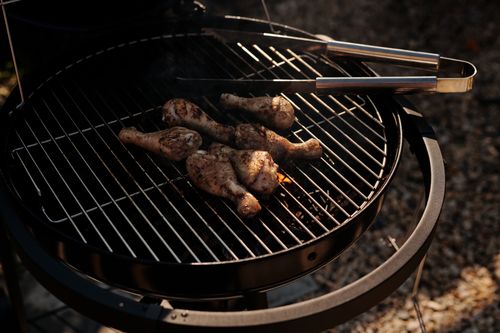
I've cooked on pellet smokers long enough to know the difference between marketing and meat. So let's skip the brochure language and talk like two people standing next to a smoking grill.
First, what is a Z Grills pellet grill, really?
Let's clear this up before anything else, because half the confusion around these grills comes from people expecting the wrong thing.
A pellet grill is not a gas grill and it is not a charcoal offset smoker. It's an automated wood-fired oven. You fill a hopper with hardwood pellets, set a temperature on a digital controller, and an auger feeds fuel into a burn pot while a fan keeps the fire clean and even. That's the whole idea: real wood smoke, set-and-forget temperature control.
Z Grills sits in the value tier of that category. It's not a Traeger, it's not a Yoder, and it doesn't pretend to be. What it does is give you the same core architecture — hopper, auger, burn pot, controller, drip tray, grease bucket — at a price that's usually several hundred dollars below the name brands. That's the entire value proposition, and it's a legitimate one.
What it is not: a magic machine that turns a $12 pork butt into competition barbecue. You still have to manage your cook. The grill just removes the fire-tending part.
What actually changes when you own one
Three things, honestly.
1. Weeknight cooking gets dramatically easier — and that's the real win. Nobody talks about this enough. The headline feature of a pellet grill isn't smoke flavor, it's the fact that you can start a cook at 6 p.m. on a Tuesday, walk inside, handle bedtime, and come back out to a finished meal. A gas grill demands your attention every few minutes. A charcoal chimney demands twenty minutes of babysitting before you even start. A pellet grill asks you to press a button and check the hopper. For busy households, that alone justifies the purchase, and it's the benefit you'll feel on day three, not day three hundred.
2. All-weather performance is better than people expect — with caveats. This is where the rain-and-sausage scenario matters. A covered pellet grill in a steady drizzle will absolutely keep cooking. The fire lives inside a sealed burn pot, the controller doesn't care about humidity, and the smoke chamber is insulated by the lid. Sausages, chicken thighs, ribs — a 225°F cook doesn't blink at bad weather.
But be honest about the caveats: pellets absorb moisture, so an open hopper in a downpour will eventually jam your auger. Wind pushing under the lid will cost you temperature. And cheap controllers struggle in extreme cold. A $30 grill cover and a spot out of direct wind solve 90 percent of it. "All-weather" means all-weather if you set it up like you expect weather.
3. Temperature consistency is the difference between good and repeatable. This is the least exciting benefit and the most valuable one. The gap between a $400 grill and a $1,200 grill is almost entirely controller quality and build tolerances. A value-tier pellet grill will swing 15 to 25 degrees around your set point on a long cook. A premium one swings 5 to 10. Does that ruin your brisket? Not if you're patient. Does it mean you should verify with a separate ambient probe instead of trusting the lid thermometer? Yes, always.
The myths that cost people money
Myth #1: "It's a smoker, so everything comes out smoky." Pellet smoke is mild. That's not a flaw — it's the design. You get clean, subtle wood flavor, not the heavy bark you'd get from a stick burner. If you want aggressive smoke, you run lower temps and longer cooks, or you supplement with a smoke tube. Expecting offset-smoker intensity from a pellet grill is the single most common source of disappointment.
Myth #2: "The upgrade program means I get a free grill." Here's where you need to read carefully instead of listening to a salesperson. The trade-in and upgrade programs are structured as a credit against a future purchase, tied to what you originally paid, on a fixed cycle — commonly described as an upgrade window every few years. The realistic framing is: buy in now, and in roughly five years you have meaningful credit toward the next unit instead of a grill with zero resale value.
That is a genuinely good deal if you were going to replace the grill anyway. It is not free money, it is not a guarantee, and the terms — eligibility, registration requirements, proof of purchase, the exact credit formula, whether it applies to sale pricing — are the whole ballgame. Get them in writing before you swipe a card. A program that isn't documented in your email inbox doesn't exist.
Myth #3: "It'll save me money versus eating out." Only if you actually cook. A pellet grill that runs twice a month is a $600 patio ornament. The math works when it becomes your default weeknight appliance, which is exactly why the ease-of-use point above matters more than any spec sheet.
Myth #4: "Cheap pellets are fine." They're not, and this is the fastest way to hate your grill. Low-grade pellets with high ash content clog the burn pot, produce uneven heat, and taste like lumber. Budget for decent hardwood pellets — hickory, oak, cherry blends — and store them dry. This is a $30-per-cook difference in experience, and it's the number one variable people skip.
Which setup fits which buyer
表格
The takeaway isn't "buy the biggest one." It's: match the unit to the cook you actually do. If you're doing two rib racks on Saturday, the entry model is correct and the flagship is a waste. If you're feeding eight people twice a month, buy the space or you'll regret it every time.
How long does the value last?
Straight answer: longer than a cheap gas grill, shorter than the marketing implies.
- The grill itself: a well-cared-for pellet grill runs five to eight years before you're replacing controllers, igniters, or a rusted fire pot. Consumables fail first — hot rod igniters and auger motors are normal wear items, and they're cheap and swappable. The body and lid usually outlive everything else.
- The upgrade credit: its value is front-loaded. If the program credits a meaningful share of your original purchase toward year-five pricing, that's structurally smarter than buying a disposable grill every three years.
- The enthusiasm: this fades fastest. Most people use a new grill constantly for two months, then settle into a rhythm. The grills that get used for a decade are the ones where the owner found three recipes they actually like.
The honest framing: this is a maintainable appliance, not a lifetime purchase. Treat it like a dishwasher — buy decent, keep it covered, replace wear parts, don't expect forever.
What it costs
Street pricing moves constantly and varies by model, season, and retailer, so treat these as shape rather than gospel:
- Entry-level units: comfortably under $500, frequently on promotion in spring
- Mid-tier with wifi and better controllers: mid-hundreds to around $700
- Larger chambers and combo units: $800 and up
- Pellets: a real ongoing cost — roughly $15 to $25 per 20-pound bag, and a long cook eats most of a bag
- Cover, probe, and a backup igniter: budget $60 to $100 up front and thank yourself later
Watch the total cost of ownership, not the sticker. The promotional price is the easy part; pellet consumption is the number that surprises people in month three. And when a "trade-in" pitch shows up, ask three questions before deciding: How many cooks will I realistically do? What exactly does the credit cover, and what's the deadline? Does this fit my actual cooking, or my aspirational cooking?
Who should skip it
Be honest with yourself here — it saves money and regret.
- You want charcoal flavor and heavy bark. Buy an offset smoker or a kettle. A pellet grill will always feel too polite.
- You want a screaming-hot sear. Pellet grills top out around 450–500°F on a good day and sear unevenly. You need a griddle, a gas grill, or a cast-iron pan on the side.
- You won't maintain it. Pellets left in a damp hopper, a fire pot full of ash, and a grease tray ignored for a season will end a grill faster than any manufacturing defect.
- You're buying for the upgrade program alone. If the grill isn't right for you now, credit in five years doesn't fix that.
Who should absolutely buy one
- Anyone who wants real wood smoke on a weeknight without babysitting a fire
- Families where "dinner is done at 6:30" matters more than "dinner is perfect at 8:00"
- First-time smokers who'd rather learn on a forgiving automated cook than ruin $90 of meat on a stick burner
- People who genuinely expect to keep cooking for the next five years, which is what makes the upgrade structure pay off
Tips that double your results
- Verify temperature with an external probe. Lid thermometers lie. A $25 ambient probe tells you what your grate is actually doing.
- Never let pellets sit in the hopper between cooks. Empty it, or at minimum keep the lid sealed and the grill covered. Moisture is the enemy of the auger.
- Clean the fire pot every few cooks. Ash buildup is the number one cause of failed ignition and flame-outs.
- Preheat with the lid open for the first few minutes. It gets the fire established cleanly and avoids a smoke burst.
- Run a smoke tube for long cooks if you want more flavor. It's the cheapest upgrade in barbecue.
- Keep a routine. Saturday ribs every other week beats three ambitious cooks in one month and then nothing until next summer.
Bottom line
A Z Grills pellet grill is not a shortcut to championship barbecue, and the upgrade program is not a free grill. What it is: a genuinely capable automated wood-fired cooker at a price that undercuts the brands it copies, sold with a loyalty structure that rewards people who actually keep cooking.
The weather performance is real. The ease-of-use advantage is the actual reason to buy. The smoke is mild by design. And the upgrade credit is worth real money — right up until you realize it only matters if you were going to buy again anyway.
The short version:
- ✔ The real payoff is convenience, not intensity — weeknight cooking is where this thing earns its keep
- ✔ Rain and cold are handled fine if you cover the grill and protect the hopper
- ✔ Upgrade credits are legitimate value, but only with written terms and a five-year ownership plan
- ✔ Budget for quality pellets and a cover; skip them and you'll blame the grill
- ✔ Don't buy it expecting offset-smoker bark or gas-grill searing — buy it for effortless smoke
If you want to avoid buyer's remorse, don't lead with the promotion. Lead with your own cooking: how often, for how many people, in what weather. Answer those three honestly and the right model picks itself.